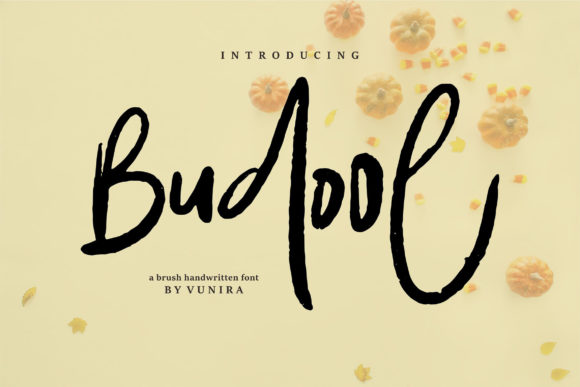
The Strategic Power of Authenticity: Elevating Brand Identity with the Budool Typeface
In an era where digital saturation is at an all-time high, the visual language of a brand does more than just communicate information; it establishes trust, evokes emotion, and differentiates a business from its competitors. For professionals, creators, and entrepreneurs, the choice of typography is no longer a mere aesthetic afterthought—it is a critical component of strategic communication. Enter Budool, a simple brushed handwritten font that has quietly become an indispensable asset for modern design workflows. While it may appear understated at first glance, its potential to elevate any creation lies in its unique ability to bridge the gap between professional polish and human authenticity.
The Shift Toward Human-Centric Design
To understand why Budool is gaining traction among marketers and freelancers, one must first look at the broader trends shaping consumer expectations. For years, corporate design leaned heavily into sterile, geometric sans-serifs and rigid grid systems. This approach signaled efficiency and stability. However, as technology becomes increasingly ubiquitous and automated, consumers are craving connection. They are drawn to brands that feel approachable, transparent, and genuinely human. This shift has sparked a renaissance in organic, hand-crafted aesthetics.
This is where Budool fits seamlessly into the contemporary creative landscape. As a brushed handwritten typeface, it carries the subtle imperfections and fluidity of human touch. It does not shout for attention with elaborate flourishes or aggressive weights. Instead, it offers a quiet confidence. For entrepreneurs building personal brands or small businesses aiming to foster community, this typographic choice signals accessibility. It suggests that there are real people behind the logo, real hands doing the work, and a genuine desire to connect.
Why Simplicity Is the New Sophistication
One might ask why a "simple" font is considered an incredibly asset to your fonts library. The answer lies in versatility and cognitive load. In a world of information overload, clarity is king. Complex script fonts can be difficult to read, especially on mobile devices or in quick-scrolling social media feeds. Overly decorative fonts can distract from the core message. Budool strikes a delicate balance. Its brushed strokes provide texture and warmth, while its straightforward structure ensures legibility.
This simplicity allows it to adapt to various contexts without losing its character. Whether used for a headline on a landing page, a caption on Instagram, or a signature on a digital invoice, Budool maintains its integrity. It does not overpower the content; it enhances it. For designers and marketers, this means less time struggling to make a font work and more time focusing on strategy and messaging. It is a tool that respects the user’s time and attention, aligning perfectly with modern UX principles that prioritize ease of use and clear communication.
Integrating Budool into Modern Workflows
The relevance of Budool extends beyond its visual appeal; it addresses the changing needs of creative workflows. Today’s creators are often generalists. A freelancer might be designing a website, writing copy, and managing social media all in the same day. They need tools that are flexible and reliable. A font like Budool reduces decision fatigue. Because it is neutral enough to pair with a wide variety of secondary typefaces yet distinct enough to stand alone, it simplifies the design process.
Consider the practical application in digital marketing. Social media algorithms favor content that stops the scroll. Images and graphics that feel overly produced or stock-like are often ignored. Content that feels authentic, perhaps even slightly raw, tends to perform better. Using Budool for quote graphics, behind-the-scenes captions, or product annotations adds that layer of authenticity. It makes the digital content feel tactile and grounded.
- Brand Consistency: Use Budool for consistent headings across blogs, emails, and social posts to create a cohesive visual identity.
- Emotional Resonance: Apply it to testimonials or customer stories to enhance the feeling of personal endorsement.
- Call-to-Action Clarity: Utilize its readability for buttons or links where a friendly nudge is more effective than a corporate command.
The Technology of Touch in a Digital World
As we move further into the age of AI-generated content and virtual interactions, the value of "human-made" markers increases. Consumers are becoming more savvy at detecting generic, algorithmically generated aesthetics. There is a growing preference for designs that show evidence of human curation. Budool, with its brushed texture, mimics the stroke of a marker or brush pen. This subtle analog quality serves as a counterpoint to the crisp, pixel-perfect nature of screens.
This phenomenon is not limited to graphic design. It reflects a larger lifestyle trend where individuals seek balance between the digital and the physical. We see it in the popularity of vinyl records, handmade ceramics, and farm-to-table dining. In typography, this translates to fonts that feel crafted rather than constructed. By incorporating Budool into their projects, designers are tapping into this cultural current. They are acknowledging that even in a high-tech environment, the human element remains the most powerful connector.
Strategic Applications for Entrepreneurs and Marketers
For business owners and marketers, the decision to use a specific font is a strategic one. It influences how a brand is perceived in terms of price point, quality, and values. A luxury brand might use a high-contrast serif to signal exclusivity. A tech startup might use a mono-spaced font to signal innovation. Where does Budool fit? It fits wherever trust and approachability are the primary goals.
Take, for example, the wellness industry. Yoga studios, mental health apps, and organic skincare brands rely heavily on creating a sense of calm and safety. A harsh, industrial font would contradict their mission. Budool’s soft, flowing lines reinforce the message of care and well-being. Similarly, in the education sector, online course creators and coaches use handwritten fonts to make complex information feel more digestible and less intimidating. It creates a teacher-student dynamic that feels supportive rather than authoritative.
Furthermore, in the realm of e-commerce, product packaging and unboxing experiences are crucial touchpoints. A simple thank-you note printed in Budool can transform a transactional interaction into a relational one. It shows attention to detail and a personal touch, encouraging customer loyalty and repeat business. These small details, when aggregated, build a robust brand reputation.
Future-Proofing Your Creative Assets
Investing in a versatile typeface like Budool is also a matter of future-proofing. Design trends cycle rapidly, but the need for authenticity is enduring. While specific styles of handwriting may come and go, the fundamental desire for human connection in commerce and communication is stable. By adding Budool to your library, you are not just buying a font; you are acquiring a tool that aligns with long-term shifts in consumer psychology.
Moreover, as remote work and digital collaboration become the norm, visual communication carries more weight. In emails, presentations, and digital proposals, typography sets the tone. A proposal written entirely in standard Arial may feel cold and impersonal. Introducing Budool for headers or key points can soften the tone, making the recipient feel more at ease and open to collaboration. It is a subtle psychological cue that says, "I am approachable, and I value our relationship."
Conclusion: The Enduring Value of Authentic Expression
In conclusion, Budool is more than just a simple brushed handwritten font. It is a reflection of the current cultural moment, where authenticity, clarity, and human connection are prized above all else. For professionals, creators, and entrepreneurs, it offers a practical solution to the challenge of standing out in a crowded digital landscape. It allows brands to speak with a voice that is both professional and personal, polished and genuine.
As you curate your design resources, consider the role that typography plays in your broader strategy. Do not just look for fonts that look good; look for fonts that feel right for your audience. Budool has the potential to elevate any creation because it respects the viewer, enhances the message, and bridges the gap between the creator and the consumer. In a world that is increasingly automated, choosing a tool that celebrates the human touch is not just a design choice—it is a strategic advantage.
Whether you are designing a new logo, crafting a social media campaign, or refining your brand guidelines, remember that the right font can change everything. Embrace the simplicity, leverage the authenticity, and let Budool help you tell your story in a way that resonates deeply with your audience.